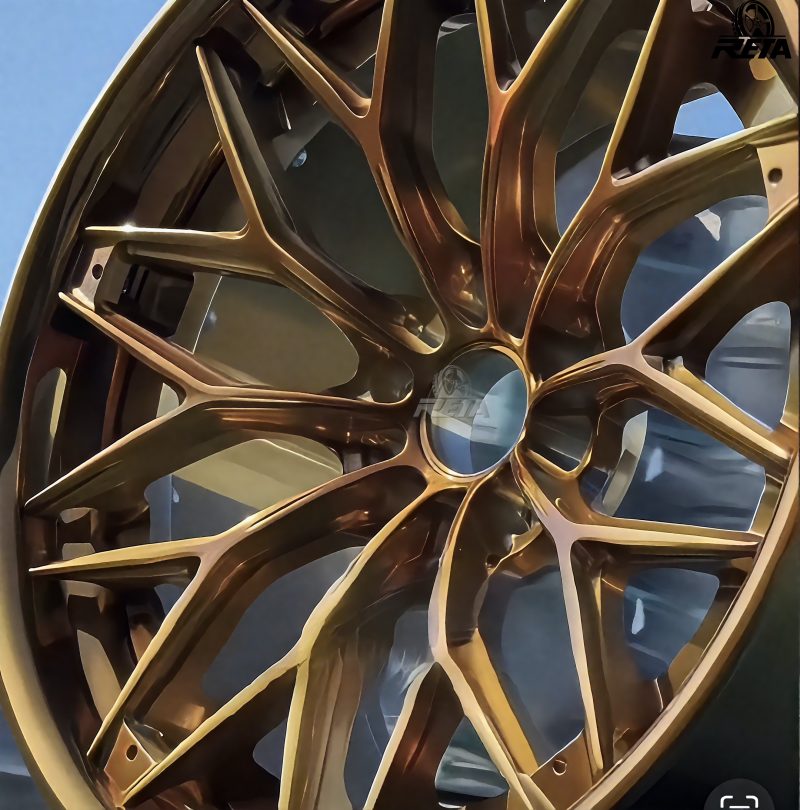
What genuinely bespoke means in a forged wheel programme, how a design moves from a conversation to a part on the car, and where the boundary sits between a finish change and a new tool.
Bespoke forged wheels are designed for a specific vehicle and a specific owner rather than selected from a catalogue. The word is used loosely in the trade, where it sometimes means nothing more than a colour choice on a stock design. In a genuine bespoke programme it means the geometry itself is created for the vehicle, the fitment is measured rather than looked up, and the finish is developed alongside the design.
That definition matters commercially because the two interpretations carry very different costs and lead times. A finish change is a production variable that can be added to an existing order. A new spoke pattern, a different concave depth or a changed window shape requires a forging die or a new machining programme, and it should be scheduled as a design project rather than as a purchase.
This article describes the bespoke process from brief to delivery, the design decisions that are genuinely open, the fitment work that has to happen before anything is drawn, the finishes and details that carry the personal element, and the questions a buyer should ask to tell a real bespoke capability from a catalogue with a colour chart attached.
What Makes Bespoke Forged Wheels Different
The first test is whether the fitment was measured on the vehicle. A bespoke programme starts with the actual arch clearance, the brake caliper profile, the suspension travel and the tyre the owner intends to run. A catalogue fitment starts with a list, and the difference shows up when the car is lowered or driven hard.
The second test is whether the design was developed for the car or adapted to it. A wheel designed for a specific body can use the shoulder line, the wheel arch shape and the brake package as inputs, producing a spoke layout that reads correctly from the side. An adapted design is a compromise between several vehicles, and it usually looks slightly wrong on all of them.
The third test is whether the finish was developed with the design. Colour, texture and the way a surface catches light are part of the object, not an afterthought applied at the end. A bespoke programme will show the customer how a brushed face behaves next to a polished lip before the parts are cut.
The fourth test is documentation. A genuine programme produces a specification sheet covering dimensions, load rating, material, finish and hardware, and it retains that sheet against the order. Without it, a replacement wheel two years later is a guess rather than a repeat.
The Bespoke Process From Brief to Delivery
The brief comes first, and it should be specific. Vehicle model and year, any suspension changes, the brake package, the tyre the owner wants, the intended use and a visual reference are the minimum. A brief that says only "aggressive but elegant" produces a design conversation that takes three times as long.
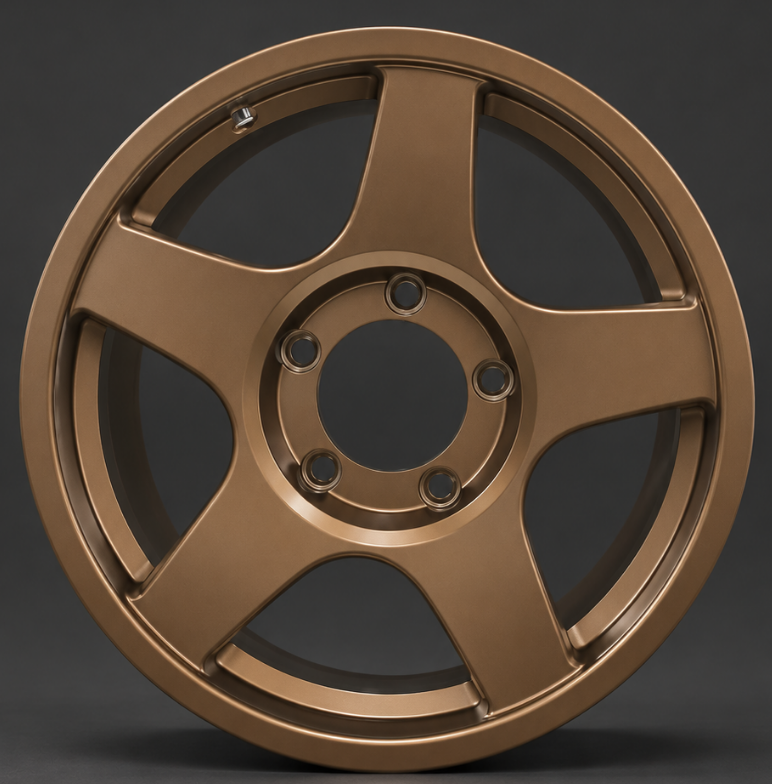
Design proposals follow, usually as renders on the actual vehicle silhouette. Two or three directions are enough: a five-spoke, a split-spoke and a multi-spoke variant at the intended diameter will show the owner which language suits the car. Renders are a decision tool, not a promise, and the difference between a render and a machined part should be explained at this stage.
Engineering review turns the chosen direction into a manufacturable part. Tool access, minimum internal radius, spoke thickness at the root, brake clearance and load rating are checked, and any compromise is explained before the design is frozen. This is the stage where a good supplier earns their fee, because a design that cannot be machined is a schedule failure waiting to happen.
A first article then proves the result. It is measured, photographed on the vehicle where possible, and approved before the set is completed. That approval step is what prevents a programme from producing four wheels that all share the same mistake.
| Stage | Deliverable | Decision the Buyer Makes |
|---|---|---|
| Brief | Vehicle data, tyre, use case, references | How far the build can depart from standard |
| Fitment survey | Measured clearance and caliper profile | Width and offset range that will work |
| Design direction | Two or three rendered proposals | Spoke language and visual weight |
| Engineering review | Manufacturability and load check | Which compromises are acceptable |
| First article | One finished wheel, measured | Approval or revision |
| Set production | Matched set with finish consistency | Nothing further, if the first article was right |
Fitment Work Before Any Drawing Starts
Fitment is where bespoke projects fail, and it fails before the design stage because nobody measured the car. Arch clearance at static height, clearance at full compression, caliper clearance at the closest point and inner clearance at full lock are the four measurements that decide what is possible.
The tyre has to be chosen before the wheel, not after. Section width varies between manufacturers for the same nominal size, and a tyre that is 8 millimetres wider than expected can turn a comfortable fitment into a rubbing one. A bespoke programme should specify the tyre by brand and model, not only by size.
Ride height matters as much as the arch. A car on adjustable suspension that will be lowered after the wheels arrive is a different fitment problem from one at stock height, and the design should be done against the final height rather than the current one.
A measurement sheet signed by the owner is a simple control that removes most of the risk. It records what the design was based on, and it makes a later disagreement about clearance a factual discussion rather than a matter of memory.
Design Freedom and Its Real Boundaries
Inside a machined programme the design space is wide: spoke count, spoke shape, window geometry, concave depth, lip treatment and hub detailing are all available without a die. That freedom is what makes bespoke work possible at single-set quantities, and it is why most one-off projects are machined rather than press forged.
The boundaries are structural and practical. Spoke thickness at the root has to carry the load, the hub has to hold the bolt pattern without distortion, the barrel has to clear the brake, and every surface has to be reachable by a cutter. A design that ignores any of those will be revised at the machine, which is the most expensive place to discover a problem.
There is also a boundary in taste that a good designer enforces. A wheel with too many elements competes with the car, and a wheel that is too plain disappears. The bespoke skill is not maximising detail but finding the proportion that makes the vehicle look resolved, which often means removing ideas rather than adding them.
Our forged wheel customization service separates the two tiers explicitly, because a customer who understands that a colour change and a new spoke pattern are different projects makes better decisions and experiences fewer delays.
Finishes and Details That Carry the Personal Element
Colour matching is the most requested bespoke finish and the hardest to deliver consistently. Matching a body colour on a curved spoke face is not the same as matching it on a flat panel, because the light behaves differently. A supplier should show a physical sample on a finished wheel rather than a colour chip.
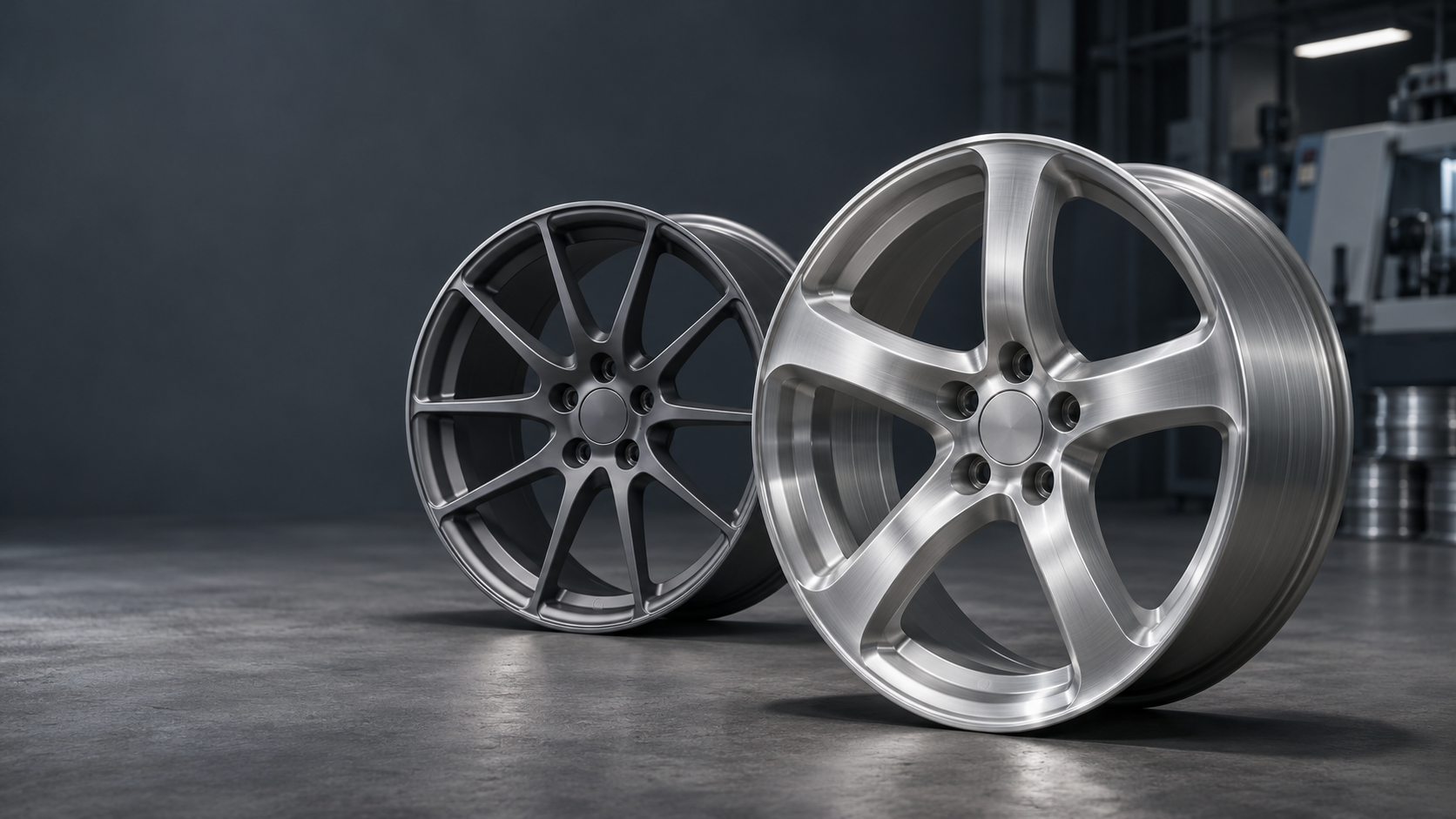
Surface texture is the second layer. Brushed, polished, matte, satin and tinted clears all change how the same geometry reads, and combining two of them on one wheel is often more effective than a single dramatic colour. A brushed face with a polished lip and a dark barrel is a combination that works on almost any body colour.
Engraving and branding are the third. A logo cut into a spoke face, a serial number on the hub or a discreet mark inside the barrel turns a wheel into a signed object. The guide to engraved logos and CNC branding sets out how depth, position and finish affect the result, and why an engraving that is too deep weakens a spoke face.
Hardware and trim are the fourth. Centre caps, decorative rings, valve stems and lug nuts are small parts that carry a disproportionate share of the perceived quality. A decorative ring for a customized forged wheel is a good example of a detail that can be changed late in a project without touching the structure.
Details that most often decide whether a bespoke set feels finished:
- Consistent finish between the four wheels, including the inner barrel that nobody photographs
- Hardware colour matched to the wheel rather than left in a default finish
- A centre cap that sits flush and can be removed without damaging the paint
Lead Time, Communication and Revision Control
A bespoke programme has a longer lead time than a catalogue order, and most of that time is not machining. Design, review, sample preparation and first-article approval consume the calendar, and a supplier who quotes only machine time is quoting an incomplete process.
Revision control is the second issue. Every change after the design freeze costs time, and changes made after the first article can cost a full re-run. A written revision record, with the date and the person who approved each change, is the simplest protection for both sides.
Communication cadence matters more than most buyers expect. A weekly update with a photograph of the actual part at each stage removes the anxiety that builds when a custom order goes quiet. For a product made once for one customer, that visibility is part of the service.
Finally, the order should specify what happens after delivery. A replacement for a damaged wheel, a touch-up for a kerbed lip and a spare centre cap are all requests that arrive later, and a bespoke programme should be able to answer them from the retained specification rather than from memory.
Mistakes That Turn a Bespoke Order Into a Delay
The first mistake is ordering before the design is frozen. A customer who approves a direction and then continues to browse references will want a change, and every change after programming starts costs more than it would have during the design phase. The design freeze is a real gate, not a formality.
The second is changing the tyre or the suspension after the wheels are specified. A tyre that is wider than planned, or a ride height lower than planned, invalidates the clearance work. If a build is still evolving, the wheel order should wait until the other components are settled.
The third is approving a colour from a screen. Monitors render metallic and tinted finishes differently, and a colour that looks deep on a phone can look flat on a wheel. A physical sample on a finished surface is the only reliable reference for anything beyond a plain solid colour.
The fourth is treating a render as a specification. A render can show a spoke thickness or a lip depth that the machined part cannot reproduce at that diameter, and the disappointment arrives when the real wheel is compared with the image. The render should be described as a direction, and the drawing should be the reference.
The fifth is forgetting the spare and the service parts. A bespoke set without a matching spare, or without the ability to reorder a centre cap, becomes awkward the first time something is damaged. Those additions are cheap at the point of order and expensive later.
- Freeze the design in writing before programming begins, including the exact tyre specification.
- Approve finish from a physical sample rather than a screen, and check it in daylight and under artificial light.
- Order the spare and the service parts with the set, while the specification is still open.
- Confirm in writing what the first article will be judged against, so approval is a comparison rather than an opinion.
Where Bespoke Ends and Production Begins
A bespoke design that proves popular often becomes a catalogue item, and that transition should be managed deliberately. The geometry is already proven, so the question becomes whether to keep machining it or invest in a forging die for volume. The answer depends on how many sets per year the market will absorb.
Keeping the design machined preserves flexibility and avoids tooling risk, at a higher unit cost. Moving to a die lowers the unit cost and shortens production time, at the price of a fixed geometry and a tooling commitment. Both are legitimate, and the wrong choice is usually made by deciding on price alone.
For a brand, the portfolio answer is usually a mix. A handful of proven shapes carry the volume and justify tooling, while bespoke work continues on machined parts and feeds new ideas into the catalogue. That structure keeps the range fresh without stranding capital in dies for designs that never sold.
Our Higher Pursuit series is where several bespoke requests have ended up once they proved repeatable, and the RETA custom forged wheel line remains the entry point for one-off work.
Designer, Dealer or Manufacturer: Who Owns the Project
A bespoke project can be run through a designer, a specialist dealer or directly with a manufacturer, and the route changes who carries the risk. A designer brings taste and vehicle knowledge but usually subcontracts production, which means a fitment problem has to travel through two organisations before it is solved.
A dealer brings convenience and local service but may not control the machining programme, so a technical question can stall. A manufacturer controls the process but may have no styling capability, which is why the strongest projects usually pair a clear design brief with direct access to the people who will cut the part.
The practical test is simple: ask who will answer a question about spoke thickness or brake clearance. If the answer is a salesperson who has to forward the email, the project has an extra layer that will cost time at the moment it can least afford it.
For a brand building a bespoke offer, the best structure is usually a direct relationship with the manufacturing partner plus an internal design voice that understands the customer. That combination keeps the creative conversation close to the buyer and the engineering conversation close to the machine.
It also sets a sensible expectation internally. A bespoke offer is a service business with a longer cycle and more communication per order than a catalogue line, and a team resourced only for order processing will find it difficult. Brands that succeed at it usually assign one person to own each project from brief to delivery, and that person becomes the single point of truth for a build that exists only once.
How RETA Handles Bespoke Programmes
RETA has produced forged wheels in Ningbo since 2012, with the company founded in 2009, a 12,000 square metre plant and more than 100 staff. Bespoke work sits inside the same production system as the catalogue range, which means a one-off design is machined and finished to the same process controls as a volume part.
The quality system covers ISO 9001, ISO 14001, ISO 45001 and IATF 16949, with national high-tech enterprise status granted in 2021. Internal limits are held tighter than the SAE, JWL and PCT sequences we design to, and 30-degree and 90-degree impact and deformation tests are added because a bespoke design has no history to fall back on.
Commercially, the minimum order is one set of four wheels, standard sizes run in roughly 7 to 15 working days and fully custom designs take about 25 to 35 working days. A bespoke design that needs a new forging die is scheduled separately and quoted as a tooling project, because mixing the two timelines is how expectations get set incorrectly.
We exhibit at SEMA, where the brand received the 2023 Best Innovative Wheel Brand Award, and bespoke enquiries there usually arrive as a photograph of a car rather than a specification. That is a fine starting point for a conversation and a poor starting point for an order, which is why every bespoke project we accept begins with a measurement sheet.
Frequently Asked Questions
Q1. What is the difference between bespoke and custom forged wheels?
The terms overlap in the market. Bespoke usually means the design is created for one vehicle and one owner, while custom often describes a catalogue design configured with a chosen finish, width and offset. The practical difference is whether new geometry is involved.
Q2. How long does a bespoke forged wheel set take?
A fully custom design typically takes about 25 to 35 working days from approved design to finished set, and a project that requires a new forging die takes longer. Design discussion and first-article approval sit outside that window and should be planned separately.
Q3. Can a bespoke design be repeated later?
Yes, if the specification and the machining programme are retained. That retention is what allows a replacement wheel or a second set to match the first, and it is worth confirming at the point of order rather than two years later.
Q4. Is a bespoke wheel automatically heavier?
Not necessarily. A design created for one vehicle can be optimised more tightly than a catalogue part that has to suit several, which sometimes produces a lighter result. The outcome depends on the load case and how much material the design needs to carry it.
Q5. Which finishes work best for a one-off set?
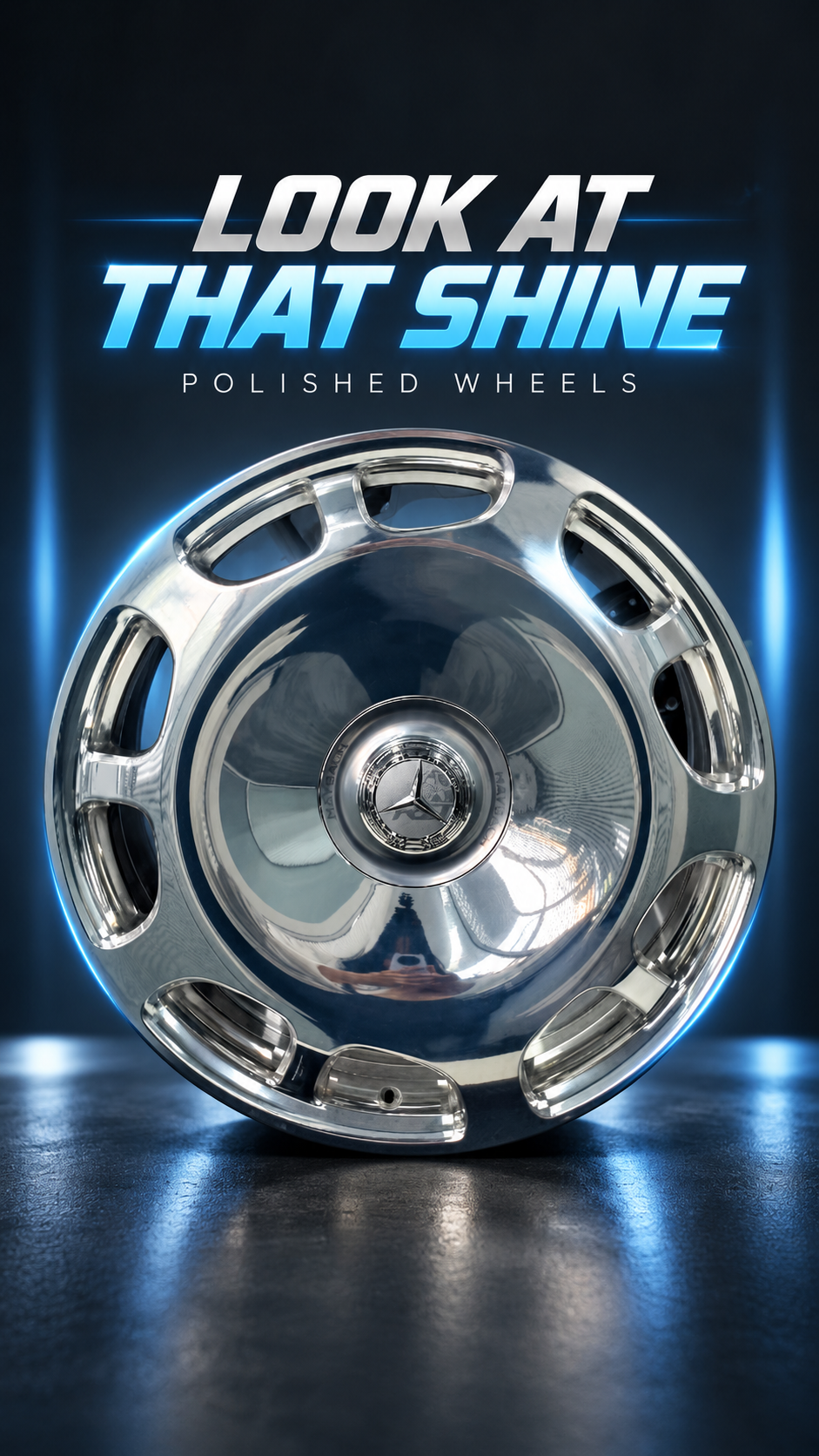
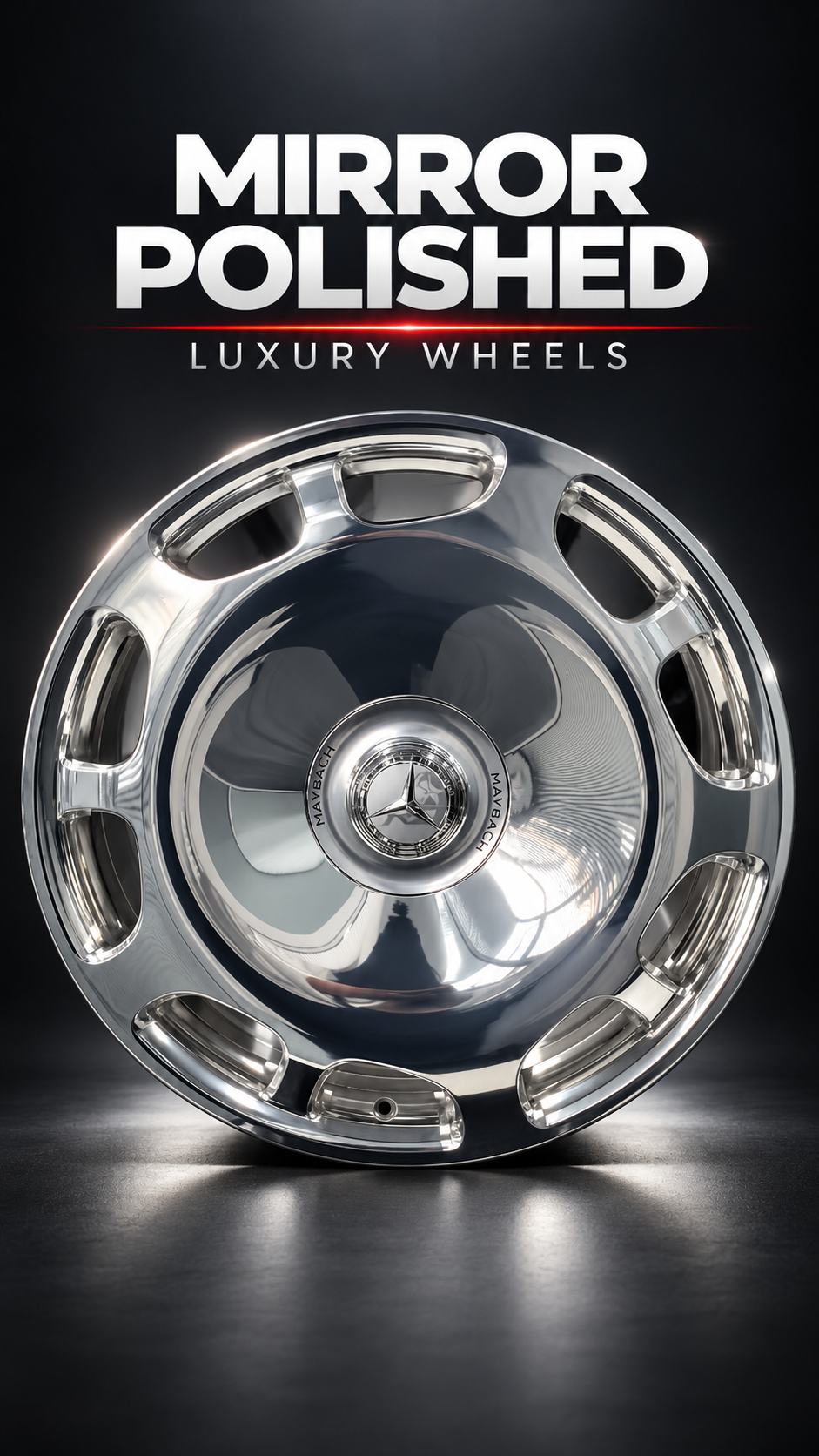
A brushed or machined face with a contrasting lip is the most forgiving choice, because it reads well on most body colours and hides minor marks. Full polish is striking but shows every imperfection, and a flat matte finish reduces the visual depth of the design.
Send us your vehicle details, tyre choice and a reference image, and we will tell you what bespoke forged wheels can realistically achieve on that car before a design is drawn.
Browse the Forged Range Start a Bespoke Brief